AI-Assisted Research: Turning Faster Search Into Better Enterprise Insight
By Lean Agile Intelligence Product & Research Team
AI-assisted research helps organizations find, compare, synthesize, and organize information faster, but faster access to information does not automatically produce trustworthy insight.
Organizations do not have an information shortage. They have an attention, synthesis, and trust problem.
A leader wants to understand a new market. A product manager needs to evaluate competitors. A transformation team is researching emerging practices. An analyst needs to understand what five different reports collectively say. An employee is trying to find an answer buried across corporate documents, emails, presentations, and the public web.
The traditional research process is often painfully manual:
Search → Open → Read → Take Notes → Compare → Find More Sources → Synthesize → Verify → Rewrite
AI compresses much of that process.
Modern research agents search across many sources, synthesize findings, organize evidence, and produce source-cited reports instead of requiring a person to manually assemble every piece of information.
Microsoft 365 Researcher, for example, can analyze information across the web and authorized organizational content, including files, emails, meetings, and chats, and produce structured, source-cited reports. Google has similarly expanded Deep Research to work across the web, files, connected repositories, and other data sources.
But making research easier introduces another challenge:
It also becomes easier to accept research without examining it carefully enough.
Microsoft Research surveyed 319 knowledge workers and found that greater confidence in generative AI was associated with less self-reported critical-thinking effort, while human effort shifted toward verification, integration, and stewardship of AI-generated information.
That captures the enterprise challenge. AI reduces the mechanical effort required to find and synthesize information.
It does not remove the need to:
- Evaluate sources
- Reconcile conflicting evidence
- Understand context
- Challenge conclusions
- Identify uncertainty
- Decide what should be trusted
Organizations don't simply need faster search.
They need an organizational capability for AI-Assisted Research.
What Is AI-Assisted Research?
AI-Assisted Research is the organizational capability to use AI to search, synthesize, compare, and summarize information while maintaining clear standards for evidence, source quality, verification, and human judgment.
AI-Assisted Research is one capability within LAI's broader AI Maturity Model, which evaluates the capabilities organizations need to move from AI adoption toward operationalization and measurable business outcomes. It sits within the AI-Assisted Insights dimension alongside AI-Assisted Data Analysis and AI-Assisted Ideation, helping teams turn information into evidence-based understanding and decision support.
AI-assisted research includes using AI to:
- Search across multiple sources
- Find relevant information faster
- Summarize individual documents
- Synthesize findings across sources
- Compare conflicting perspectives
- Identify recurring themes
- Extract evidence supporting a question
- Organize scattered research
- Search internal organizational knowledge
- Generate structured research summaries
- Surface gaps requiring additional investigation
- Turn large amounts of information into usable AI insights
The distinction between AI-assisted research and simply asking an AI assistant a question matters.
A quick interaction might look like:
What are the major trends in enterprise AI adoption?
That is useful for orientation.
Research requires something more deliberate:
Analyze current primary research on enterprise AI adoption from Microsoft, Google, Deloitte, DORA, and other authoritative sources. Separate findings about individual productivity from evidence of measurable organizational outcomes. Cite each major finding, identify where credible sources disagree, and flag claims that cannot be independently substantiated.
The second interaction defines:
- Research Question
- Source Expectations
- Analytical Lens
- Evidence Standard
- Required Output
That is much closer to an organizational research practice than a conversational query.
Modern research tools increasingly support this distinction. Microsoft's Researcher is designed for complex, multi-step investigation and lets users define whether research draws from organizational content, the web, or both. Google's Deep Research similarly supports research planning, custom sources, web search, file search, and comparison across multiple forms of evidence.
A stronger AI-assisted research capability helps organizations answer:
- When should employees use AI for research?
- Which sources should AI use?
- How should research questions be framed?
- What evidence is strong enough for the decision?
- How should sources be verified?
- How should conflicting findings be represented?
- When is a quick AI answer enough?
- When is deeper research required?
- How should internal and external information be combined?
- What should a standard research output contain?
- Are employees verifying important conclusions?
- Is research becoming faster without becoming less rigorous?
- Are AI insights grounded in evidence people can inspect?
The goal is not to automate thinking.
It is to reduce the mechanical work of: Finding → Reading → Organizing → Comparing → Synthesizing
so people spend more time evaluating: What the evidence means and what should be done with it.
What Level of AI-Assisted Research Maturity Are You?
Before strengthening AI-assisted research, identify whether AI is simply helping individuals search faster or has become part of a repeatable, source-grounded research capability.
LAI's AI-Assisted Research Maturity Model uses five levels to describe that progression. Click a level to jump to what it looks like in practice and how to progress.
| Level | Where You Are | Primary Focus |
|---|---|---|
| Level 1: Starting | Research depends heavily on manual search, reading, note-taking, synthesis, and subject-matter expertise. | Use AI on bounded research questions while preserving human verification. |
| Level 2: Emerging | Individuals use AI for summaries, comparisons, and research, but source standards and verification practices vary. | Capture the research behaviors that produce trustworthy results. |
| Level 3: Enabling | Shared research standards define questions, source expectations, synthesis, verification, and output structure. | Make credible AI-assisted research repeatable across teams. |
| Level 4: Operationalizing | AI-assisted research is embedded into recurring research workflows and grounded in defined internal and external sources. | Design the AI workflow around the right evidence for each research problem. |
| Level 5: Optimizing | Research practices continuously improve based on source quality, verification, context, rework, cycle time, and usefulness. | Produce trustworthy AI insights faster without weakening evidence standards. |
The objective is not to maximize AI research usage.
It is to understand whether AI-assisted research consistently produces useful, source-grounded insight that people know how to verify and apply.
Teams looking for a broader baseline can use LAI’s AI Enablement & Productivity Assessment to examine AI-Assisted Research alongside the other capabilities that determine whether AI is being used effectively and consistently in day-to-day work.
The Five Levels of AI-Assisted Research Maturity
LAI's AI-Assisted Research Maturity Model describes how organizations progress from manual information gathering toward repeatable, source-grounded AI workflows that continuously improve the speed and quality of research.
The five levels are:
Starting → Emerging → Enabling → Operationalizing → Optimizing
The progression moves from:
Manual Search and Synthesis → Individual AI Research → Shared Research Practices → Source-Grounded AI Workflow → Continuous Research Improvement
Initially, AI reduces the effort required to gather and summarize information. Individual experimentation reveals which research techniques work. Shared practices establish consistent expectations for questions, evidence, synthesis, and verification.
Workflow integration connects AI to the right internal and external sources.
Measurement and learning then improve:
- Research cycle time
- Source quality
- Context
- Verification effort
- Research reuse
- Decision readiness
The objective is not simply: Faster answers.
It is: Faster movement from a meaningful question to credible evidence and useful AI insights.

Level 1: Starting — Research Is Manual and Fragmented
At the Starting level, AI-assisted research is absent or used only occasionally, and research relies heavily on manual information gathering and synthesis.
Employees:
- Search manually
- Open multiple reports
- Read individual sources
- Copy excerpts
- Build spreadsheets of findings
- Maintain separate notes
- Ask subject-matter experts to fill gaps
- Manually reconcile conflicting information
The research itself can still be high quality. The challenge is the amount of human effort required to assemble it.
The same information is often researched repeatedly because previous work is scattered across:
- Folders
- Documents
- Presentations
- Personal notes
- Individual knowledge
Research capacity therefore depends heavily on how much time an individual can spend finding and organizing information.
Observable Evidence
Common signals include:
- Manual information gathering
- Manual synthesis across sources
- Scattered research notes
- Repeated research on similar topics
- Heavy reliance on subject-matter experts
- Limited AI-assisted research
- Significant time spent assembling evidence
The first opportunity is not to automate the research function.
It is to identify:
One recurring research activity where AI reduces information-processing effort without removing human verification.
How to Progress to Emerging
Start with bounded research questions.
Good initial use cases include:
- Summarizing several known reports
- Comparing competitor offerings
- Synthesizing customer research
- Reviewing regulatory material
- Creating an initial market landscape
- Comparing technology options
- Organizing internal documents around a specific question
Avoid beginning with:
Research everything about this topic.
Define a specific question. Then define the research boundaries.
- Research Question
- What exactly are we trying to understand?
- Decision
- What decision will the research support?
- Scope
- What is included and excluded?
- Sources
- What evidence is acceptable?
- Time Period
- How current must the evidence be?
Microsoft's Researcher guidance similarly recommends being specific about the question and clearly defining whether the research scope should include workplace information, the web, or both.
Practical Example: Run an AI Research Comparison
Choose one real research question.
For example:
What are the most common reasons enterprise AI pilots fail to scale into measurable business impact?
Step 1: Define the Research
Capture:
- Decision: What will this research inform?
- Scope: What is included?
- Sources: Which types of sources are appropriate?
- Time Period: How current must the evidence be?
Step 2: Conduct a Traditional Research Pass
Use the team's existing process.
Capture:
- Sources found
- Major findings
- Contradictions
- Time spent
Step 3: Conduct an AI-Assisted Pass
Ask AI to research the same question.
Require:
- Multiple sources
- Citations
- Separation of evidence from interpretation
- Identification of conflicting evidence
- Explicit indication of uncertain claims
Step 4: Human Verification
Open the most important sources.
Confirm:
- Does the source actually support the claim?
- Is the source current?
- Is it primary or secondary?
- Is important context missing?
- Did AI overstate the evidence?
Step 5: Compare
Evaluate:
- Time: Was synthesis faster?
- Coverage: Did AI surface useful evidence the manual pass missed?
- Accuracy: Were important claims supported?
- Insight: Did AI improve understanding or merely compress information?
The objective at Starting is not: AI does the research.
It is: AI reduces search and synthesis effort while the researcher remains accountable for what gets trusted.

Level 2: Emerging — Individuals Build Their Own AI Research Practices
At the Emerging level, employees independently use AI-assisted research techniques across their work.
One analyst asks AI to summarize a report. Another builds a detailed market-research prompt. A product manager uses AI for competitive analysis. Research documents contain AI-generated synthesis. The organization is experiencing useful experimentation. But quality remains dependent on the individual.
One employee requires primary sources and verifies every material citation. Another accepts the first response as fact.
One researcher supplies rich decision context. Another asks a vague question and receives a generic answer.
The organization has: AI-assisted research activity
without yet having: A shared research standard
Observable Evidence
Observable signals include:
- Ad hoc AI-generated research summaries
- Personal research prompts
- AI used for quick research questions
- Research documents containing AI-generated analysis
- Different source standards across employees
- Inconsistent citation verification
- Different approaches to conflicting evidence
This level is important because employees are discovering where AI creates genuine research leverage.
The next challenge is turning those lessons into organizational knowledge.
How to Progress to Enabling
Study the practices of strong AI-assisted researchers.
Ask:
- How do they frame research questions?
- Which sources do they trust?
- How do they define what to exclude?
- How do they handle conflicting evidence?
- How do they verify citations?
- When do they combine internal and external information?
- Which research activities consistently benefit from AI?
- Where does AI create misleading confidence?
- How do they distinguish evidence from interpretation?
Microsoft Research's findings reinforce the importance of making verification intentional rather than assuming employees automatically perform it.
The objective is to identify: Research behaviors worth making repeatable.
Practical Example: Run an AI Research Practice Harvest
For one month, ask employees to contribute one example where AI materially improved a research activity.
Capture:
- Research Question: What were you trying to understand?
- Purpose: What decision or activity did the research support?
- Sources: What information did AI use?
- Approach: How was the research requested?
- Useful Result: What did AI do particularly well?
- Weakness: What required correction or additional investigation?
- Verification: How did the researcher validate the findings?
Then identify reusable patterns.
- Multi-Source Comparison
- Compare the findings from these six sources. Identify areas of agreement, disagreement, and missing evidence. Do not combine conflicting findings into a single conclusion.
- Evidence-First Research
- For every major conclusion, identify the supporting source and distinguish directly supported claims from interpretation.
- Primary-Source Research
- Prioritize original research, official documentation, regulatory sources, company filings, and peer-reviewed material. Use secondary sources when stronger primary evidence is unavailable.
- Research Gap Analysis
- Based on the available evidence, identify what we can confidently conclude, what remains uncertain, and what additional information would materially affect the decision.
Publish the strongest patterns.
The progression becomes: "I have a good way to research with AI."
to: "We understand which AI-assisted research practices consistently strengthen our work."
Level 3: Enabling — Shared AI Research Practices Become Repeatable
At the Enabling level, AI-assisted research becomes a shared organizational capability supported by common expectations for questions, sources, synthesis, verification, and output.
Guidelines explain when and how AI should be used. Research patterns are centralized. Standard summary structures exist. Multi-source synthesis becomes repeatable.
The organization establishes a shared definition of: Credible AI-assisted research
Observable Evidence
Evidence includes:
- Published AI research guidelines
- Centralized research prompt patterns
- Common AI research summaries
- Repeatable multi-source synthesis
- Defined source expectations
- Shared verification practices
- Clear separation of evidence and interpretation
Research quality becomes less dependent on individual prompting skill.
The organization increasingly standardizes:
- What question are we answering?
- What evidence counts?
- Which sources should be used?
- How should contradictions be handled?
- What requires verification?
How to Progress to Operationalizing
Create a shared research framework rather than simply building a prompt library.
Define five things.
1. Research Question
- What specifically needs to be understood?
2. Decision Context
- Why does the answer matter?
3. Source Expectations
- What forms of evidence deserve priority?
- For example:
- Tier 1
- Original research
- Government or regulatory sources
- Official company documentation
- Primary datasets
- Internal first-party evidence
- Tier 2
- Established professional research
- Reputable industry research
- Credible analyst material
- Tier 3
- Commentary
- Journalism
- Secondary summaries
- Tier 1
- For example:
- Lower-tier sources are not automatically unusable. The point is to understand:
- What type of evidence supports the conclusion.
4. Synthesis Standard
- Research should distinguish:
- Evidence
- Interpretation
- Conflicting findings
- Unknowns
- Implications
- Recommendations
5. Verification Standard
Define which claims require direct source validation before the research informs a meaningful decision. This becomes increasingly important as AI research agents gain access to larger and more diverse information sets.
Practical Example: Create an AI Research Brief
Use a standardized brief for significant research.
Research Question
- What are we trying to understand?
Decision Supported
- What will this research help us decide?
Research Scope
- Included:
- Excluded:
- Time period:
- Geography:
- Industry / segment:
Source Requirements
For example:
- Prioritize primary sources.
- Use current evidence for rapidly changing subjects.
- Seek independent support for broad conclusions.
- Identify conflicting evidence.
- Cite material claims.
Required Research Output
- Executive Summary: What are the most important conclusions?
- Key Findings: What does the evidence indicate?
- Supporting Evidence: Which sources support each finding?
- Contradictions: Where do credible sources disagree?
- Unknowns: What cannot be concluded confidently?
- Implications: What does the evidence mean in the organization's context?
- Questions for Further Research: What should be investigated next?
Human Verification
The researcher confirms:
- Material citations were opened
- Sources support attributed claims
- Important conflicting evidence was considered
- Recommendations are distinguished from evidence
- Material uncertainties remain visible
The goal is to create a repeatable pattern:
Question → Research → Evidence → Synthesis → Verification → AI Insights

Level 4: Operationalizing — AI Becomes Part of the Standard Research Workflow
At the Operationalizing level, AI-assisted research becomes embedded directly into recurring research workflows and grounded in the internal and external sources appropriate to each research problem.
AI is an expected part of appropriate research work. Research processes contain explicit AI steps. Standard research structures are used. AI works from defined source sets. Human verification remains part of consequential research.
The organization measures whether AI-assisted research is consistently applied where it is expected to add value.
Observable Evidence
Observable evidence includes:
- Research processes containing explicit AI steps
- Standardized AI research outputs
- AI working from defined source sets
- AI connected to relevant internal knowledge
- Consistent use within appropriate research activities
- Research cycle time measured
- Verification built into the workflow
At Enabling: Employees know how to perform credible AI-assisted research.
At Operationalizing: The AI workflow is designed to make credible research happen consistently.
AI also moves beyond open-web research.
Depending on permissions and the research need, the research universe includes:
- Internal documents
- Organizational research
- Knowledge repositories
- Meeting information
- Customer evidence
- Structured data
- External research
- Official web sources
Microsoft Researcher already combines authorized workplace information with external web sources, while Google's Deep Research supports web content, uploaded files, connected repositories, and specialized information sources.
This creates an important enterprise shift:
Research no longer has to begin with manually locating every piece of information.
How to Progress to Optimizing
Select high-value recurring research workflows and design the AI workflow around the evidence each one requires.
Examples include:
- Competitive research
- Market research
- Product research
- Technology evaluation
- Customer research
- Regulatory research
- Strategic research
Then define the appropriate source universe.
Competitive Research
- Potential sources:
- Company websites
- Public filings
- Product documentation
- Pricing
- Analyst research
- Internal sales intelligence
Technology Evaluation
- Potential sources:
- Vendor documentation
- Architecture standards
- Security requirements
- Previous internal technology decisions
- Benchmark research
- Engineering experience
Regulatory Research
- Potential sources:
- Statutes
- Regulations
- Agency guidance
- Official interpretations
Do not simply give AI access to everything.
Define: The research universe appropriate to the question.
Practical Example: Build a Source-Grounded AI Research Workflow
Consider a technology team evaluating an enterprise AI development platform.
Step 1: Research Request
Capture:
- Question
- Which platform best meets our organization's requirements?
- Decision Criteria
- Security
- Integration
- Developer experience
- Governance
- Cost
- Scalability
Step 2: Define Sources
- Internal
- Architecture standards
- Security requirements
- Current technology stack
- Previous proof-of-concept results
- External
- Official vendor documentation
- Pricing
- Security documentation
- Independent benchmark evidence where appropriate
Step 3: AI Builds the Research Plan
Before execution, define the research sequence:
- Understand internal requirements.
- Identify candidate platforms.
- Gather evidence for each criterion.
- Identify missing information.
- Compare findings.
- Highlight uncertainty.
Google's Deep Research supports review and refinement of a generated research plan before the investigation proceeds, preserving human direction within the workflow.
Step 4: AI Researches
- AI retrieves, organizes, and synthesizes the relevant evidence.
Step 5: Produce the Standard Research Summary
For each platform:
- Evidence: What does the source establish?
- Fit: How does that evidence relate to organizational requirements?
- Gap: What remains unknown?
- Source: Where did the evidence originate?
Step 6: Human Verification
A domain expert validates:
- Important technical claims
- Security implications
- Cost assumptions
- Material conclusions
- Recommendations
Step 7: Decision
Research supports the decision. It does not automatically make it.
Measure the AI Workflow
Track:
- Eligible Research Usage
- What percentage of appropriate research work uses the defined process?
- Source Verification
- Are material citations actually being checked?
- Research Completion Time
- How long from question to usable synthesis?
- Research Rework
- How often do findings require significant correction?
- Research Usefulness
- Do researchers and decision-makers find the output fit for its intended purpose?
- Decision Readiness
- Does the research contain enough evidence and context to support the decision it was intended to inform?
The key measure is not: AI queries completed.
It is whether: AI-assisted research is consistently used where the organization expects it to improve research work.

Level 5: Optimizing — Research Continuously Improves Through Better Sources and Context
At the Optimizing level, AI-assisted research becomes a continuously improving capability informed by source quality, context, verification results, research rework, cycle time, and the usefulness of the resulting AI insights.
Teams review the effect AI has on research workflows. Source preferences improve. Context becomes richer. Research patterns become more specialized. Weak sources are removed. Verification becomes more targeted.
The organization improves research speed without lowering the evidence standard required for the work.
The question evolves from: "Are we using AI for research?"
to: "How do we continuously improve the sources, context, synthesis, verification, and workflow required to produce trustworthy insight?"
Observable Evidence
Observable signals include:
- Reviews of AI's impact on research workflows
- Source relevance tuning
- Context-enrichment improvements
- Use-case-specific research patterns
- Improving research cycle time
- Lower research rework
- Stronger source quality
- More targeted human verification
At this level, the organization recognizes an important principle: Research quality is not determined by model quality alone.
It depends on: Research Question + Sources + Context + Method + Verification + Human Judgment
More information is not automatically better. More relevant evidence is better.
How to Sustain and Continuously Improve
Create a research learning loop:
Research → Verify → Use → Evaluate → Improve Sources → Improve Context → Research Again
After meaningful research, ask:
- Which sources contributed the strongest evidence?
- Which sources created noise?
- Were important internal sources missing?
- Did AI over-rely on one source?
- Were stale sources given too much weight?
- Was conflicting evidence clearly surfaced?
- Did AI receive enough organizational context?
- Which citations required correction?
- Which parts of the workflow consumed the most time?
- What information did decision-makers still need?
- Which AI insights proved useful?
- Which conclusions required significant reinterpretation?
Use those lessons to improve the next research cycle.
Practical Example: Run a Quarterly AI Research Effectiveness Review
Select a representative sample of important AI-assisted research from the previous quarter.
1. Research Performance
Track:
- Research cycle time
- Time to first useful synthesis
- Human verification effort
- Research rework
2. Source Quality
Classify commonly used sources.
- High Value
- Original studies
- Primary datasets
- Official documentation
- Direct organizational evidence
- Situational
- Analyst interpretation
- Credible industry commentary
- Reputable secondary reporting
- Lower Value
- Duplicative articles
- Unsourced summaries
- Stale material
Then improve source preferences.
3. Citation Reliability
Sample material conclusions.
Ask:
- Did the source actually support the claim?
- Was relevant qualification omitted?
- Was the source current enough?
- Was secondary reporting used where stronger primary evidence existed?
Verification should not disappear as AI research improves.
It should become: More targeted and more effective.
4. Context Effectiveness
Review whether AI received enough organizational context. A generic market analysis might conclude that a technology category is attractive.
That conclusion changes once the research incorporates:
- Existing strategy
- Customer profile
- Regulatory environment
- Budget
- Technology architecture
- Previous experiments
Improve source connections and research instructions accordingly.
5. Tune Research by Use Case
Different research workflows require different evidence strategies.
- Market Research
- Prioritize:
- Market data
- Company disclosures
- Primary research
- Customer evidence
- Prioritize:
- Technical Research
- Prioritize:
- Official documentation
- Standards
- Original technical research
- Internal architecture
- Prioritize:
- Regulatory Research
- Prioritize:
- Statutes
- Regulations
- Regulatory agencies
- Official guidance
- Prioritize:
- Internal Process Research
- Prioritize:
- Policies
- Process documentation
- Internal communications
- Operating data
- Prioritize:
One universal research prompt should not govern every form of enterprise research.
6. Create an AI Research Improvement Backlog
| Improvement | Reason | Measure |
|---|---|---|
| Prioritize primary sources | Too much secondary commentary | Source quality |
| Add internal strategy documents | Research lacks business context | Research rework |
| Reduce stale sources | Fast-changing topics produce outdated findings | Citation validity |
| Add contradiction analysis | Reports overstate consensus | Research quality |
| Create technical-research pattern | Generic research is weak for engineering | Research usefulness |
| Improve verification sampling | Human review is inconsistent | Verification coverage |
Then choose: Keep → Refine → Add Context → Improve Sources → Specialize → Remove
7. Measure the Outcome That Matters
Research exists to improve understanding and support action.
Do not optimize for: Research reports produced
or: AI queries completed
Look instead at:
- Research Cycle Time
- Can important questions be investigated faster?
- Research Rework
- Does synthesis require fewer major corrections?
- Decision Readiness
- Does the output contain the evidence needed for its intended purpose?
- Source Quality
- Is the research grounded in appropriate evidence?
- Research Reuse
- Can previous research be found and reused rather than recreated?
- Verification Effectiveness
- Are the claims that matter being checked appropriately?
The objective is to reduce the time between: Question → Credible Evidence → Useful AI Insights
without weakening the standard required to trust those insights.
Related capabilities: AI Output Evaluation, AI Prompting
Key Takeaway
AI-assisted research maturity isn't achieved when employees can produce an impressive research report in minutes. It is demonstrated when AI consistently helps people find and synthesize the right evidence faster, shared practices make research trustworthy and repeatable, human verification remains where it matters, and the research process continuously improves through better sources, context, and learning.
From AI Search to Source-Grounded Research Workflows
AI-assisted research becomes operationalized when individual search and summarization evolve into a repeatable AI workflow built around defined research questions, appropriate evidence, structured synthesis, and human verification.
AI-Assisted Research often begins with: "Tell me about this topic."
That is useful for orientation. Operationalization goes much further.
The maturity model progresses from:
Manual Search and Synthesis → Individual AI Research → Shared Research Practices → Source-Grounded AI Workflow → Continuous Research Improvement
Initially, employees use AI to find and summarize information faster. Individual experimentation reveals which techniques produce useful research.
Shared practices establish expectations around:
- Questions
- Sources
- Evidence
- Synthesis
- Verification
Workflow integration connects AI to the right internal and external information and makes research part of recurring organizational work.
Measurement and learning improve source relevance, context quality, verification, and research cycle time.
That is the difference between: Using AI to answer a question
and: Building an operational AI-assisted research capability
As research agents become more capable, the scarce organizational capability shifts away from:
Can we find information?
toward:
- Can we define the right question?
- Can we provide the right evidence?
- Can we distinguish strong sources from noise?
- Can we surface disagreement and uncertainty?
- Can we verify the claims that matter?
- Can we turn the evidence into useful AI insights?
That is where human research skill becomes more important—not less.
AI reduces the mechanical cost of finding and synthesizing information.
The organization still needs a system for deciding:
What should be trusted and what should be done with it.
Evaluate Whether AI Is Producing Better Research, Not Just Faster Answers
Generating a research summary quickly demonstrates useful AI assistance.
The more important question is whether AI-assisted research has become a repeatable organizational capability that produces credible, useful insight.
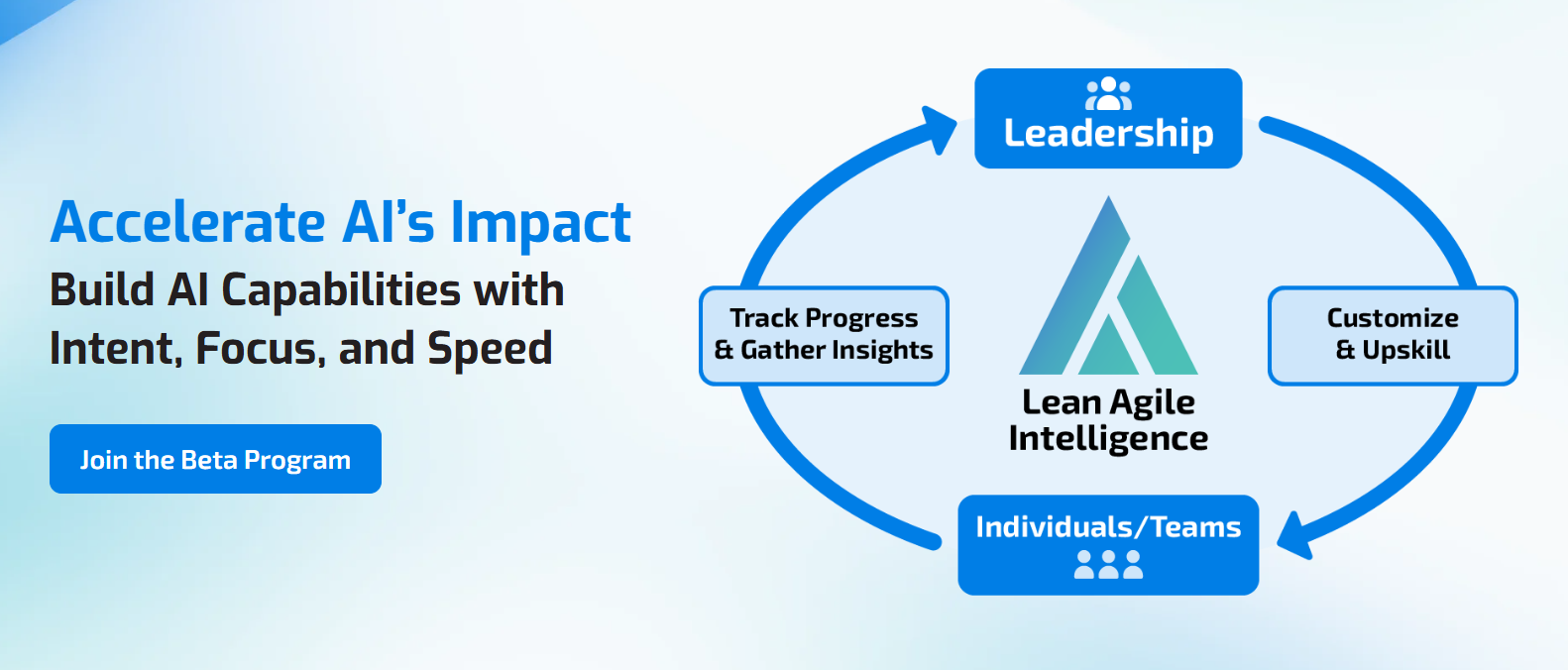
LAI's AI Enablement & Productivity Assessment establishes a baseline across AI-Assisted Research and the related capabilities teams need to operationalize AI, identifies gaps, and measures progress over time.
For AI-Assisted Research, that means evaluating whether the organization:
- Frames research questions clearly
- Defines the decision the research supports
- Uses appropriate source standards
- Prioritizes stronger evidence where available
- Distinguishes evidence from interpretation
- Identifies contradictions and uncertainty
- Verifies material claims
- Uses relevant internal organizational context
- Embeds AI into recurring research workflows
- Measures research cycle time and rework
- Reuses previous research where appropriate
- Continuously improves source quality and context
- Produces AI insights people can trace back to credible evidence
Prefer to start with early access? Join the AI Assessment Beta Program.